

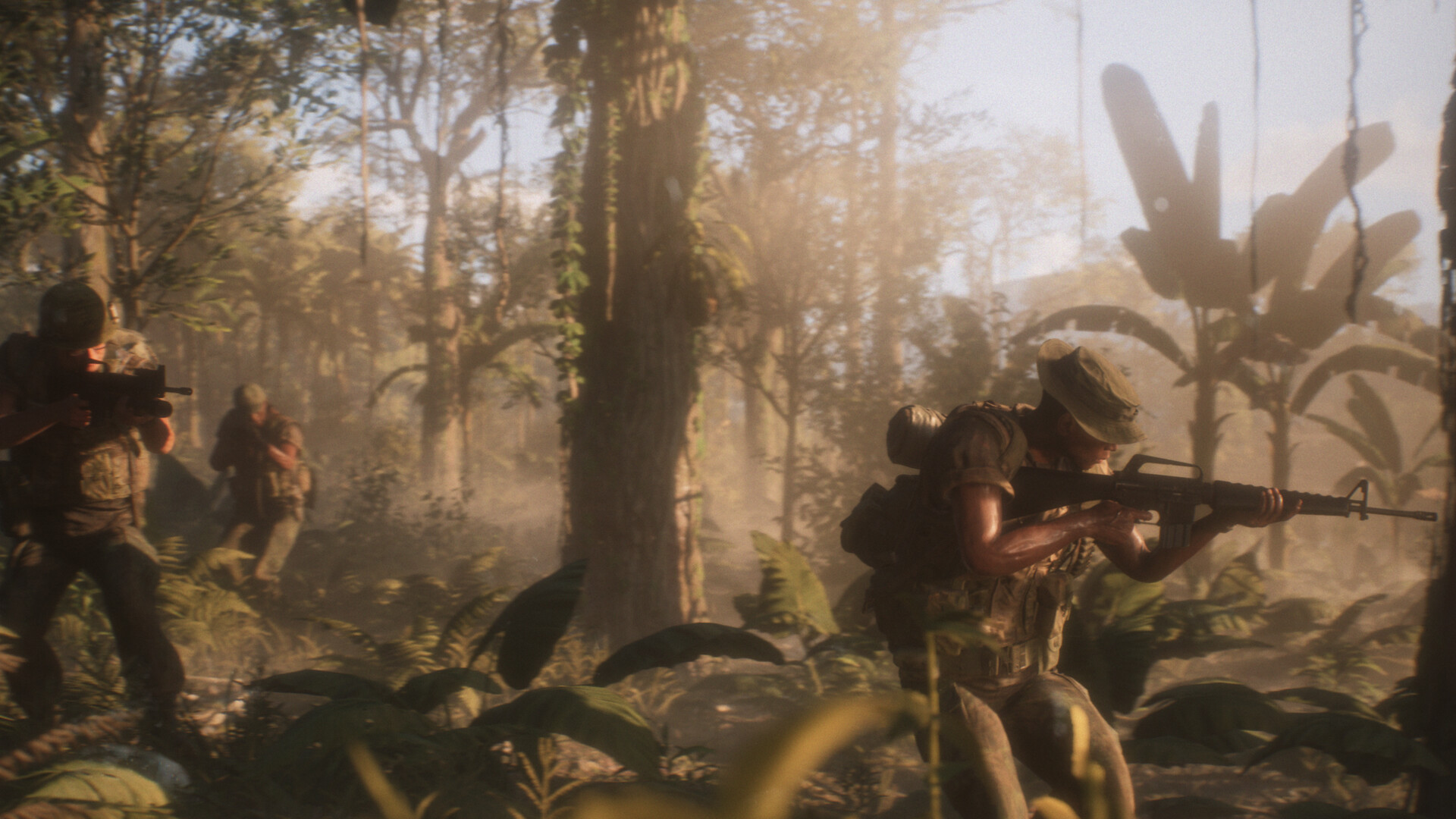
When Hell Let Loose first established itself as a premier 50v50 tactical military simulation, its formula relied on wide European hedgerows, ruined towns, and open farmland where long-range rifle sightlines dictated every push. With Hell Let Loose: Vietnam, Team17 has transported that uncompromising tactical framework directly into the suffocating, claustrophobic jungles, muddy deltas, and firebase outposts of Southeast Asia.
The result is a tense, nerve-wracking shooter where sightlines shrink from hundreds of meters down to mere yards, making squad communication and listening for footfalls in the thicket matters of life and death.
The Welcome to the Jungle: Environmental Atmosphere
The most immediate triumph of Hell Let Loose: Vietnam lies in its map architecture and visual atmosphere. Environments range from the river networks of the Mekong Delta to the treacherous, fog-draped hills of Khe Sanh and the burnt rubber plantations near Saigon.
Engineered with Unreal Engine 5, the jungle feels alive and dangerous. Sunlight struggles to pierce thick triple-canopy foliage, casting deep shadows where enemy soldiers can easily lie in wait. Tall elephant grass sways in real-time under rotor wash from hovering Huey helicopters, while dynamic mud tracks alter vehicle handling depending on rain cycles.
Audio design deserves equal praise. The iconic chop of helicopter blades echoing in the distance, the crackle of M16 and AK-47 fire through dense trees, and the deafening roar of incoming napalm strikes create an immersive soundscape that constantly keeps your heart rate elevated.
Squad Logistics and Jungle Tactics
While traditional WWII warfare centered around armor line-advancements and artillery barrages, Hell Let Loose: Vietnam pivots heavily toward asymmetric squad combat, ambush setups, and riverine mobility.
Asymmetric Faction Dynamics
The mechanical split between factions feels distinct and authentic:
- US Forces (Air Cavalry & Marines): Rely on superior firepower, heavy air support call-ins (napalm strikes, gunship strafes), and PBR (Patrol Boat, Riverine) transports to secure waterways.
- PAVN / NLF Forces: Master asymmetric stealth. They utilize hidden tunnel networks (which act as subterranean Garrisons/spawn points), tripwire booby traps, and punji stick pits to ambush advancing squads before disappearing back into the brush.
The “Commander” role has been updated with era-appropriate abilities. US Commanders can call in helicopter troop drops to bypass fortified choke points, while NLF Commanders can activate hidden movement tunnels that allow whole platoons to flank enemy outposts unnoticed.
Gunplay and TTK (Time-To-Kill)
Gunplay remains uncompromisingly lethal. A single chest shot from a semi-automatic rifle or assault rifle will put a soldier down, making reckless sprinting across open rice paddies a guaranteed death sentence.
Weapon handling captures the visceral recoil of 1960s infantry weaponry. The M16A1 offers high controllable burst fire at the cost of rapid ammunition consumption, while the heavy 7.62mm rounds of the AK-47 punch cleanly through thin wooden huts and jungle foliage. Weapon jamming mechanics have been introduced for prolonged firefights in muddy water, forcing players to manage reload habits and weapon maintenance between engagements.
The Role of Communication
More than any other modern tactical shooter, Hell Let Loose: Vietnam demands active voice communication. Squad Leaders must constantly coordinate with the Commander to drop supply crates, construct field outposts, and call in artillery smoke. Playing without a microphone severely limits your effectiveness and deprives you of the deep squad-level camaraderie that makes victories so rewarding.
Performance and Server Stability
Simulating 100 simultaneous players, detailed ballistic physics, destruction parameters, and dense jungle foliage is a massive technical burden.
On PC, running at 1440p with DLSS/FSR enabled yields a steady 75–90 FPS on modern mid-range GPUs. Console performance on PS5 and Xbox Series X targets 60 FPS, maintaining smooth performance during squad firefights. However, when multiple air strikes, smoke artillery, and 50 players converge on a single contested capture point, minor framerate drops down to the mid-40s can occur. Day-one patches have already stabilized server tick-rates, keeping hit registration crisp even during chaotic engagements.
Final Verdict
Hell Let Loose: Vietnam is a masterclass in tactical FPS design. It successfully shifts the franchise’s brutal 50v50 warfare into a setting that demands entirely new strategies, heightened spatial awareness, and absolute squad cohesion. If you crave authentic, high-stakes military action where teamwork triumphs over individual twitch reflexes, this trip to the jungle is essential.


Discussion & Responses