

When The Elder Scrolls IV: Oblivion originally debuted in 2006, it redefined open-world RPG ambition with its sprawling wilderness, dynamic Radiant AI, and vibrant high-fantasy setting. Exactly twenty years later, Bethesda has brought the champion of Cyrodiil back to life with Oblivion Remastered, launching across Nintendo Switch 2 and PC.
Far more than a simple resolution bump, this remaster acts as a bridge between nostalgia and modern performance. It retains the quirky charm and open-ended freedom that made the original a classic while ironing out two decades of graphical decay and interface clunk.
Returning to Cyrodiil: A Visual Transformation
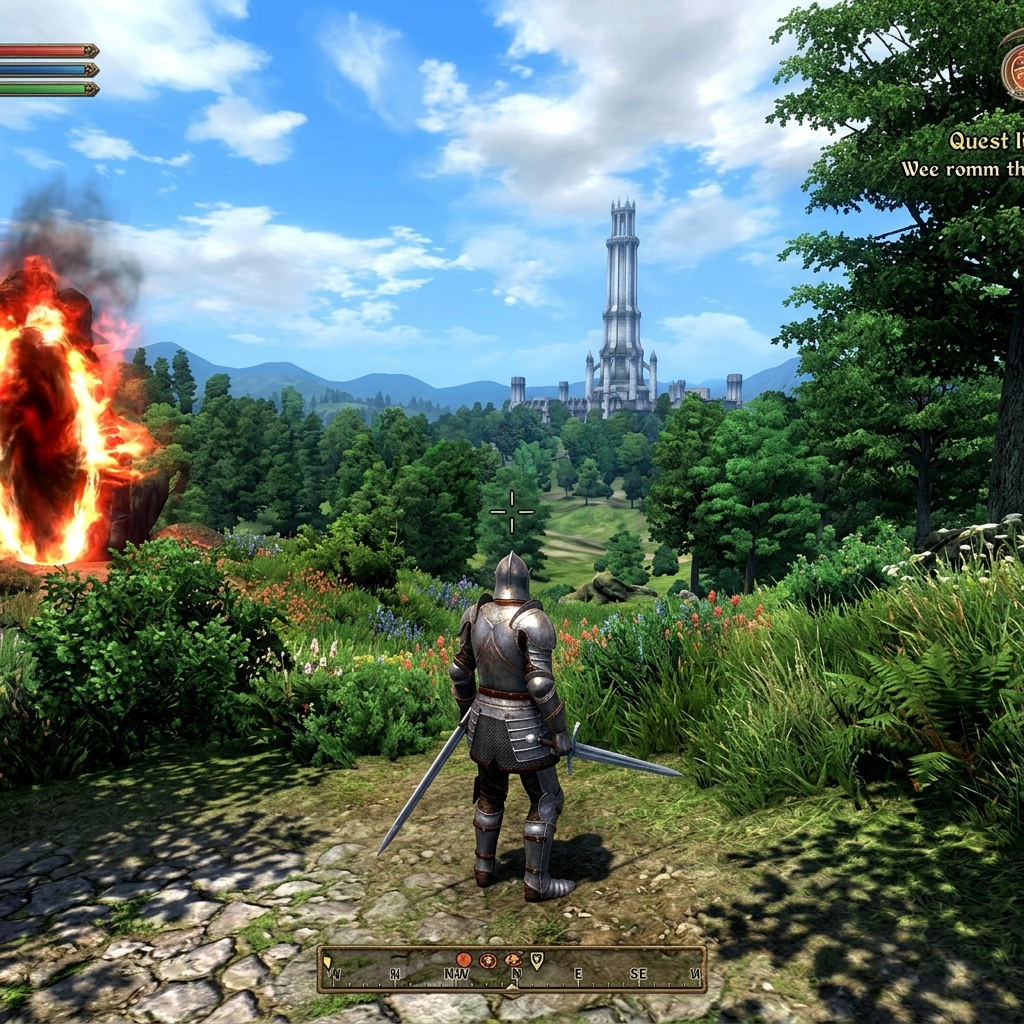
The first moment you step out of the Imperial City sewers into the sunlit heartland of Cyrodiil remains one of gaming’s greatest cold opens. In Oblivion Remastered, that sequence hits with immense visual weight.
Rebuilt lighting engines introduce realistic volumetric fog across Lake Rumare, dynamic canopy shadowing through the Great Forest, and overhauled water shaders that reflect the blazing red portals of Oblivion gates on the horizon. Character models—famously criticized for their bloated “dough face” aesthetic in 2006—have received tailored asset remakes. Imperial guards look battle-worn in detailed steel plate, High Elves carry aristocratic sharpness, and Khajiit fur textures look natural under dynamic sunbeams.
Crucially, the remaster retains the vibrant, saturated color palette that set Oblivion apart from Skyrim’s muted tundra. Cyrodiil still feels like a classic, high-fantasy fairytale landscape, only rendered with high-fidelity PBR (Physically Based Rendering) materials.
Modernizing the Imperial Interface
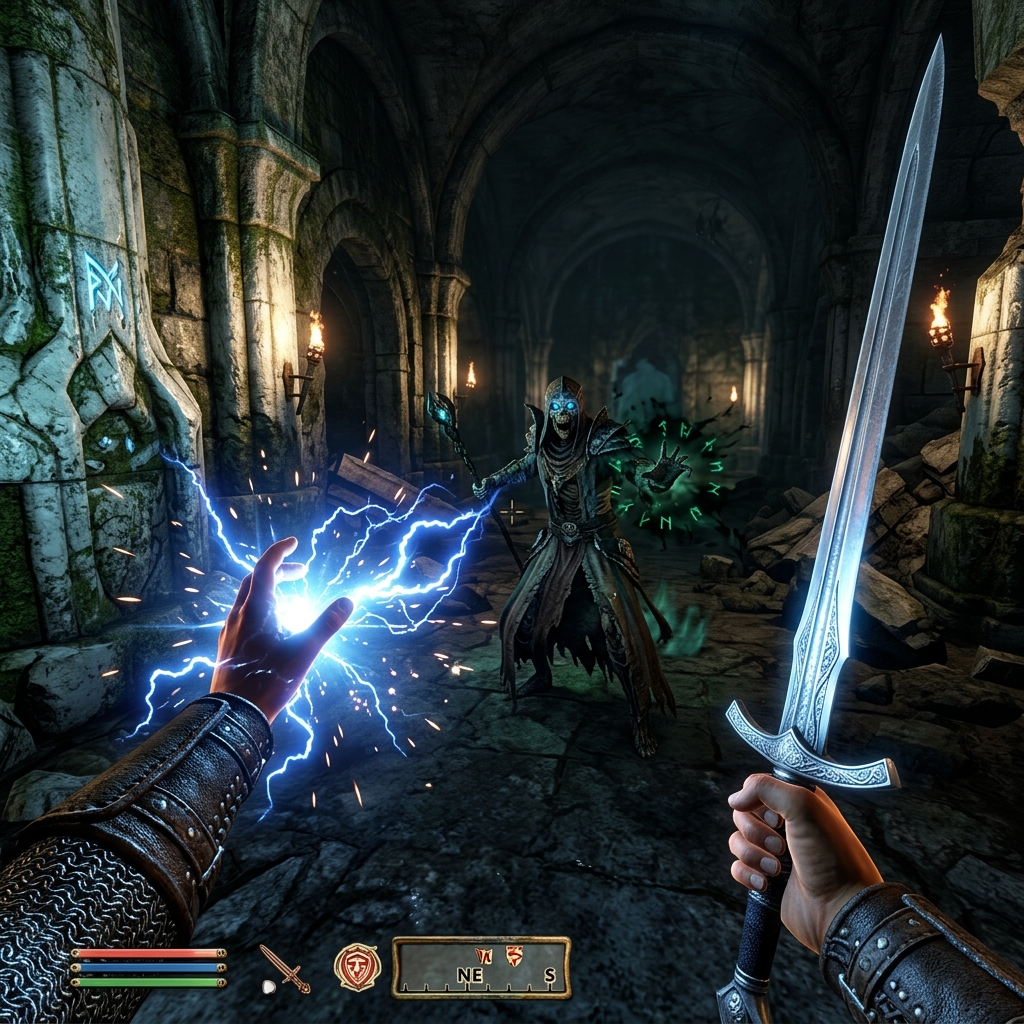
One of the biggest hurdles facing modern players returning to mid-2000s Bethesda RPGs is UI friction. Oblivion Remastered tackles this directly without stripping away deep RPG customization.
Key Quality-of-Life Upgrades
- Radial Quick-Select Wheel: Instead of pausing mid-combat to dig through spell lists, players can assign 8 spells, potions, or weapons to a responsive hot-wheel.
- Dual-Bind Magic Casting: Spellcasting now operates independently of melee hands, mirroring Skyrim’s fluid dual-wielding setups while keeping Oblivion’s dedicated spell button mechanics intact.
- Streamlined Inventory Sorting: Menus can now be filtered by weight-to-value ratio, stolen status, and magic category—making dungeon looting significantly less tedious.
Movement speed and weapon collision have also received subtle tuning. Sword swings carry noticeable weight, blocking triggers crisp recoil animations, and archery trajectory feels predictable without losing stat-based damage scaling.
The Radiant AI Legend: Preserving the Charm
When Bethesda announced a remaster, long-time fans worried that the iconic “Radiant AI”—famous for town NPCs having absurd, unscripted conversations about mudcrabs—would be heavily sanitized.
Thankfully, Bethesda left the core AI logic intact while fixing quest-breaking bugs. Townspeople still walk scheduled daily routines, shopkeepers lock up at night, and guard AI will still chase you across half the continent over a stolen paintbrush. The voice acting retains its original theatrical delivery, featuring restored audio tracks uncompressed from master recordings.
Technical Performance: Nintendo Switch 2 Breakdown
Testing the remaster on Nintendo Switch 2 hardware reveals how far handheld power has progressed.
- Docked Mode: Target 1440p resolution at a rock-solid 60 FPS, utilizing dynamic resolution scaling during heavy spell-effect combat inside Oblivion gates.
- Handheld Mode: Crisp 1080p rendering with target 60 FPS performance. Load times between overworld zones and city interiors have been crushed down from 15 seconds on original hardware to under 2 seconds via solid-state storage.
- Battery Life: Expect around 3.5 to 4 hours of continuous exploration on standard Switch 2 battery settings.
PC performance is similarly optimized, supporting ultra-wide monitors, uncapped framerates, ray-traced ambient occlusion, and native DLSS/FSR frame generation options.
Final Verdict
The Elder Scrolls IV: Oblivion Remastered sets the benchmark for how classic RPGs should be updated. It respects the original design philosophy that made Cyrodiil legendary, focusing its efforts on meaningful graphical improvements, UI fluidity, and performance stability. Whether you are re-entering the Arena as Grand Champion or experiencing Shivering Isles for the very first time, this is the definitive way to play one of the greatest RPGs ever crafted.
Discussion & Responses